


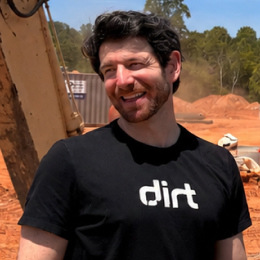


A few years ago I moved back to the United States after nearly a decade building a company in Brazil. I wanted to do the most basic thing a person does to lay down roots: find a home. It was far harder than it should have been.
We're short millions of homes in this country. Prices relative to income are at all-time highs. Almost everyone agrees that we need to build more housing. So why aren't we?
I wanted to understand, so I went and asked the people who actually build.
We're short millions of homes in this country. Prices relative to income are at all-time highs. Almost everyone agrees that we need to build more housing. So why aren't we?
I wanted to understand, so I went and asked the people who actually build.
What 200 conversations taught me
We spoke with more than 200 builders, real estate developers, municipalities, and land professionals.
We learned that builders and developers want to build more housing. What holds them back is finding the right site to build on and meeting all local requirements. More than 99% of land is off market, and figuring out whether any given piece of land can be developed for a particular goal is front-loaded, risk-heavy work.
That process is a behemoth we built over decades. Each rule came from a good place: protect the wetlands, keep out of the floodplain, make sure the roads and sewers can handle growth, give communities a voice. We need these protections. At the same time, stacked on top of each other, they mean that going from a raw site to moving dirt is excruciatingly slow, full of hidden landmines and hard to scale. And that holds back everything: single-family, infill, mixed-use, all of it.
It's too darn hard to build.
We learned that builders and developers want to build more housing. What holds them back is finding the right site to build on and meeting all local requirements. More than 99% of land is off market, and figuring out whether any given piece of land can be developed for a particular goal is front-loaded, risk-heavy work.
That process is a behemoth we built over decades. Each rule came from a good place: protect the wetlands, keep out of the floodplain, make sure the roads and sewers can handle growth, give communities a voice. We need these protections. At the same time, stacked on top of each other, they mean that going from a raw site to moving dirt is excruciatingly slow, full of hidden landmines and hard to scale. And that holds back everything: single-family, infill, mixed-use, all of it.
It's too darn hard to build.
The hardest job in development
Here's what evaluating land actually looks like today. Site search is slow, and feasibility is slower.
The data is scattered: GIS portals, zoning PDFs, flood maps, county records, and engineer emails, assembled by hand one parcel at a time. If a rezone is needed, someone sits through years of planning commission recordings to figure out whether this board has ever said yes to a project like theirs, or, if they’ve said no to similar projects, the reasons why.
Deals die late. Infrastructure risks, moratoriums, zoning conflicts, easements and prior land use surface after weeks of time and soft costs are already sunk. Often the flaw that kills the site turns up on the tenth stone a developer turns over, after significant work on the first nine.
And all that manual work and consultant turnaround caps how many deals a team can pursue at once, which limits how fast a firm can grow or expand into new markets.
The people who do this work are heroes. They develop the communities the rest of us live in, and their jobs have never been harder. Every year the codes get longer, the constraints multiply, and the hours in a day stay the same.
The data is scattered: GIS portals, zoning PDFs, flood maps, county records, and engineer emails, assembled by hand one parcel at a time. If a rezone is needed, someone sits through years of planning commission recordings to figure out whether this board has ever said yes to a project like theirs, or, if they’ve said no to similar projects, the reasons why.
Deals die late. Infrastructure risks, moratoriums, zoning conflicts, easements and prior land use surface after weeks of time and soft costs are already sunk. Often the flaw that kills the site turns up on the tenth stone a developer turns over, after significant work on the first nine.
And all that manual work and consultant turnaround caps how many deals a team can pursue at once, which limits how fast a firm can grow or expand into new markets.
The people who do this work are heroes. They develop the communities the rest of us live in, and their jobs have never been harder. Every year the codes get longer, the constraints multiply, and the hours in a day stay the same.
Why now
For the first time, AI can actually navigate this maze. Reading thousands of pages of zoning code, years of hearing minutes, a stack of GIS layers, and an engineer's email together, the way an experienced land person holds them in their head, wasn't possible even a couple of years ago. Now it is.
That's why we're building Dirt.
We set out to rethink land development from the ground up, and we made one design decision early that shapes everything else: Dirt starts with your firm,analyzing opportunities based on your land strategy, your buy-box, your underwriting criteria, your risk factors, so the analysis that comes back fits cleanly into your workflows and how your team actually works. Every insight traces back to a source you can click and dig into. You stay in control of every assumption. Dirt does the work; you make the call.
That's why we're building Dirt.
We set out to rethink land development from the ground up, and we made one design decision early that shapes everything else: Dirt starts with your firm,analyzing opportunities based on your land strategy, your buy-box, your underwriting criteria, your risk factors, so the analysis that comes back fits cleanly into your workflows and how your team actually works. Every insight traces back to a source you can click and dig into. You stay in control of every assumption. Dirt does the work; you make the call.
What changes if we get this right
More housing gets built, faster, with less waste, because developers stop burning months proving which sites don't work and put that time into the ones that do. Municipalities get applicants who show up understanding the local rules and the local record. The partnership between the people who approve housing and the people who build it gets healthier.
And the work itself gets better. Land development is a team sport. A deal passes through the land acquisition analyst, the entitlement manager, the civil engineer, and the director of development, plus the brokers, attorneys, and consultants around them. We built Dirt so all of those people work from the same living record of a site. Every one of them gets a free seat. Invite anyone who touches the deal, and everyone sees where things stand.
And the work itself gets better. Land development is a team sport. A deal passes through the land acquisition analyst, the entitlement manager, the civil engineer, and the director of development, plus the brokers, attorneys, and consultants around them. We built Dirt so all of those people work from the same living record of a site. Every one of them gets a free seat. Invite anyone who touches the deal, and everyone sees where things stand.
Everything starts with dirt
Today, Dirt finds the sites that fit your buy-box and produces feasibility analyses and yield studies in minutes so you surface risk early and move faster on good dirt. While finding and screening sites is where most tools stop, it's where Dirt starts. We're taking the same approach all the way from raw land to final plat. We've built the platform side by side with more than a dozen developer design partners, and their teams are already moving at a new speed and level of precision that wasn’t possible until now. Nick Kouloheras, Senior Land Development Manager at Barron Collier Companies, put it this way: "Workflows that traditionally required months of effort are now being completed in a fraction of the time. Our team is making development decisions faster and with greater confidence."
That's the whole idea. Give the people who build our communities their time back, and focus their energy on the opportunities that deserve it.
Everything starts with dirt. And we're just getting started.
That's the whole idea. Give the people who build our communities their time back, and focus their energy on the opportunities that deserve it.
Everything starts with dirt. And we're just getting started.
.svg)
.svg)


